大逃杀
Tibetan medical thangkas draw global spotlight at symposium in Xizang_我的网站

A |
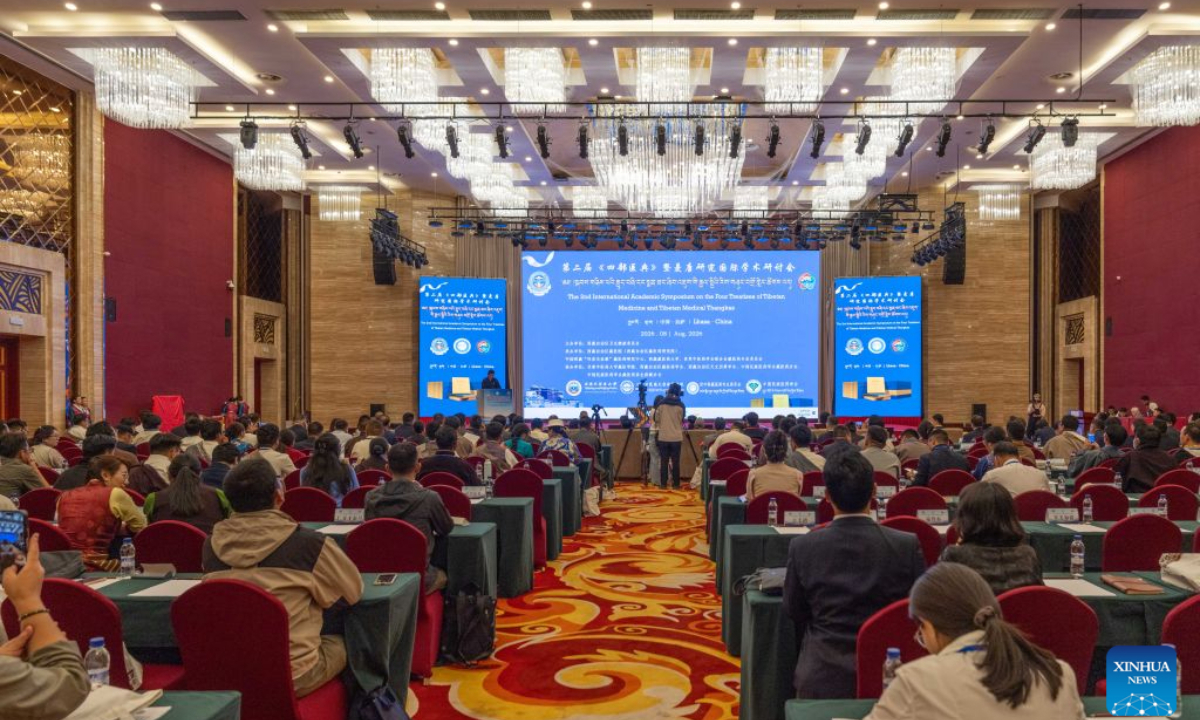
The second international academic symposium on "The Four Treatises of Tibetan Medicine" and Tibetan medical thangkas is held in Lhasa, southwest China's Xizang Autonomous Region, Aug. 20, 2026. An international symposium opened in southwest China's Xizang Autonomous Region on Thursday to shed light on the growing global interest in traditional Tibetan medicine and its visual illustrations drawn on thangkas. Held in the regional capital Lhasa, the second international academic symposium on "The Four Treatises of Tibetan Medicine" and Tibetan medical thangkas brought together more than 200 experts from China, Britain, Germany, Austria, Mongolia and Nepal. Discussions centered on the historical evolution of the classic treatises, the iconographic interpretation of Tibetan medical thangkas, and pathways for modern clinical application and international cooperation. Written between the 8th and 12th centuries, "The Four Treatises of Tibetan Medicine" is the most influential foundational work on traditional Tibetan medicine. It was inscribed on the UNESCO Memory of the World Register in 2023. Based on the work, the 80-scroll Tibetan medical thangkas serve as a visual teaching complement, covering diagnostics, pharmacology, preventive care and medical ethics. The medical thangkas were added to China's national documentary heritage list also in 2023. (Xinhua/Tenzing Nima Qadhup)An international symposium opened in southwest China's Xizang Autonomous Region on Thursday to shed light on the growing global interest in traditional Tibetan medicine and its visual illustrations drawn on thangkas.
Held in the regional capital Lhasa, the second international academic symposium on "The Four Treatises of Tibetan Medicine" and Tibetan medical thangkas brought together more than 200 experts from China, Britain, Germany, Austria, Mongolia and Nepal.
Discussions centered on the historical evolution of the classic treatises, the iconographic interpretation of Tibetan medical thangkas, and pathways for modern clinical application and international cooperation.
At the symposium, a research center for Tibetan medical thangkas was inaugurated.
Written between the 8th and 12th centuries, "The Four Treatises of Tibetan Medicine" is the most influential foundational work on traditional Tibetan medicine. It was inscribed on the UNESCO Memory of the World Register in 2023.
Based on the work, the 80-scroll Tibetan medical thangkas serve as a visual teaching complement, covering diagnostics, pharmacology, preventive care and medical ethics. The medical thangkas were added to China's national documentary heritage list also in 2023.
Among the participants was Katharina Anna Sabernig, a lecturer from the Medical University of Vienna, Austria, who first encountered Tibetan medical murals at Labrang Monastery in Gansu Province in 1994. She later returned and began delving deeper into the works.
"I saw these murals and I started to get deeper and deeper and to understand all this," Sabernig recalled.
Mary Caroline Wyatt, a scholar with dual British-Greek citizenship, began collaborating on an English translation of texts about Tibetan medical thangkas last September. She noted that complete English versions have long been scarce.
"Our translations target professional readers so that we preserve many specialized, traditional terms," said Wyatt.
The event was hosted by the regional health commission and co-organized by the regional Tibetan medicine hospital and Xizang University of Tibetan Medicine.
Xizang has formulated and implemented a series of policies on promoting Tibetan medicine and encouraging innovation. According to a government white paper released last year, the region has 51 public Tibetan medicine institutions, employing 5,287 professionals and operating 3,260 beds, up from 28 institutions, 2,232 professionals and 1,364 beds in 2012.
In April, China rolled out its first national recommended standard for ethnic-medicine disease classification and codes for Tibetan medicine.
Tsering, president of the regional Tibetan medicine hospital, said inscriptions on the UNESCO Memory of the World Register and China's national documentary heritage list have brought Tibetan medicine to a broader global audience.
"We will make the most of these opportunities to promote academic exchanges and clinical collaboration worldwide," Tsering said.
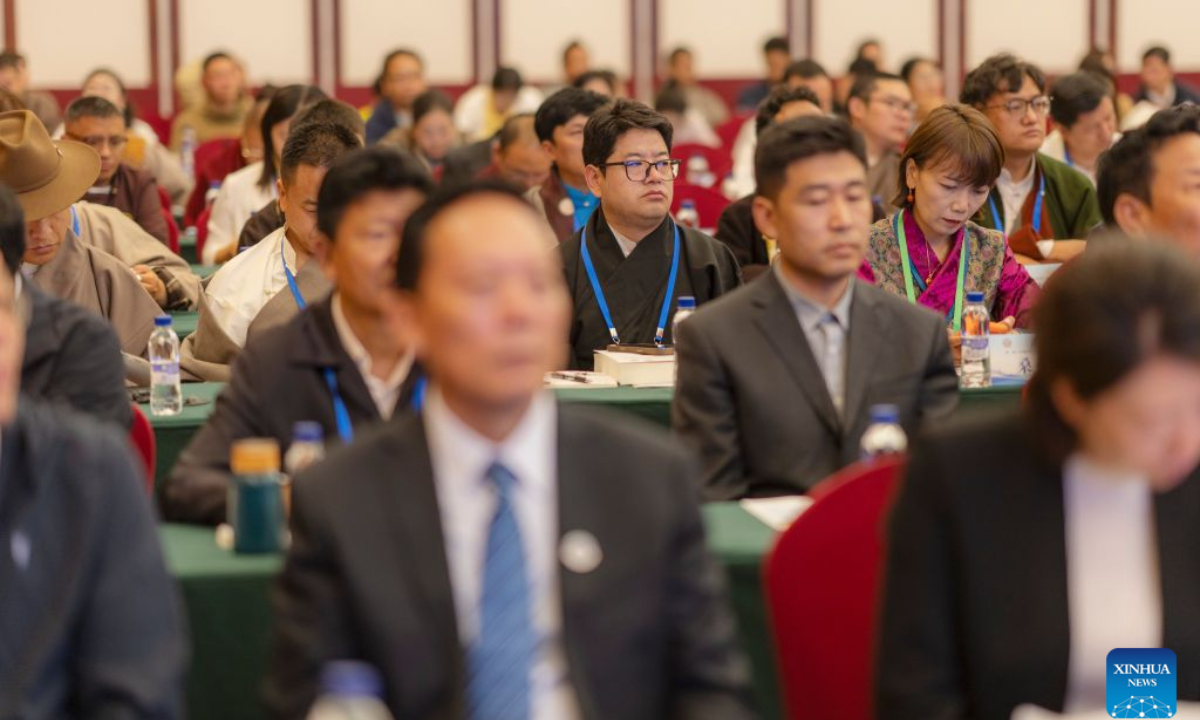
This photo taken on Aug. 20, 2026 shows a scene of the second international academic symposium on "The Four Treatises of Tibetan Medicine" and Tibetan medical thangkas in Lhasa, southwest China's Xizang Autonomous Region. (Xinhua/Liu Zhoupeng)
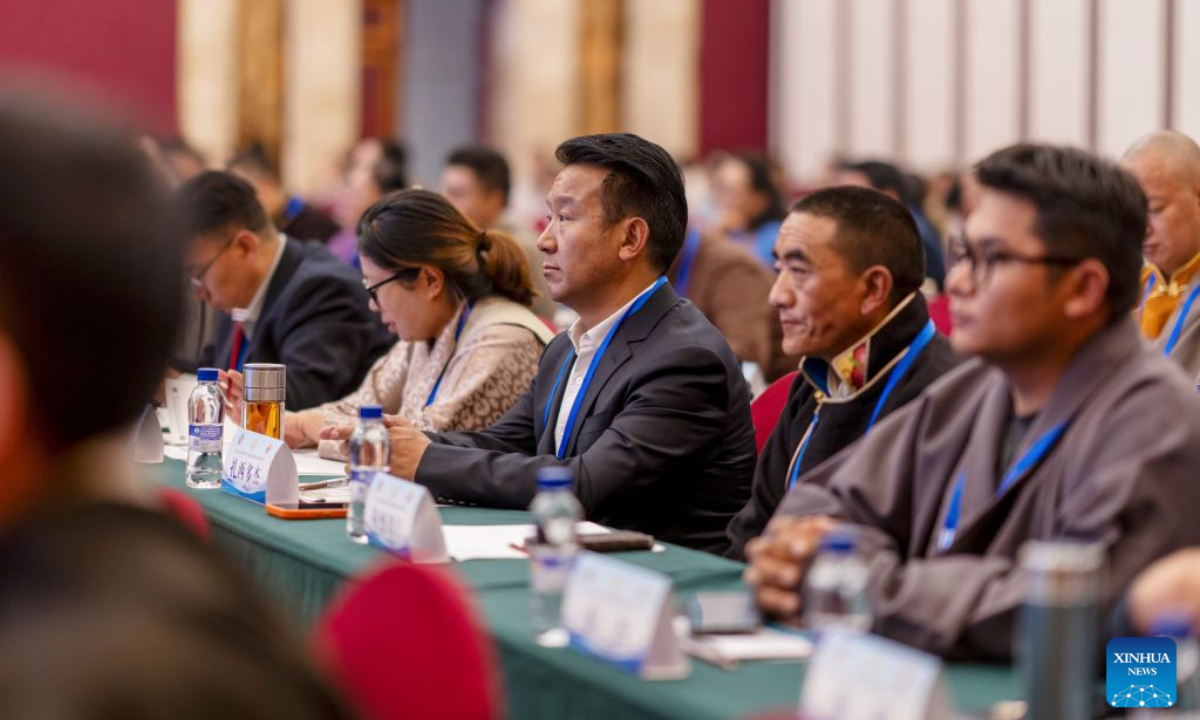
This photo taken on Aug. 20, 2026 shows a scene of the second international academic symposium on "The Four Treatises of Tibetan Medicine" and Tibetan medical thangkas in Lhasa, southwest China's Xizang Autonomous Region. (Xinhua/Tenzing Nima Qadhup)
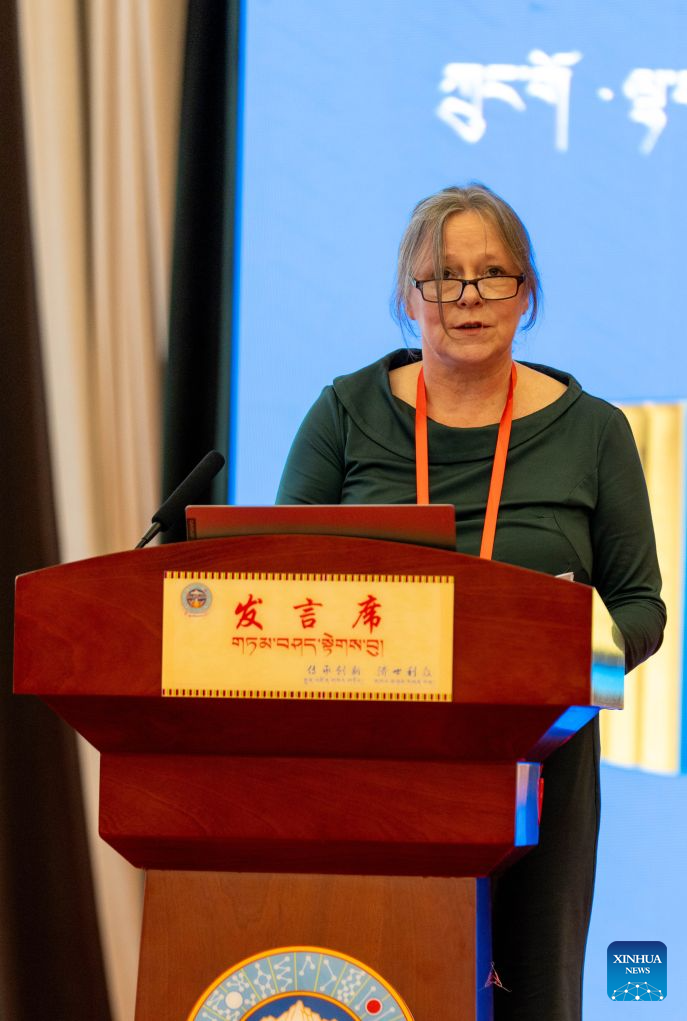
Katharina Anna Sabernig from the Medical University of Vienna, Austria, delivers a speech at the second international academic symposium on "The Four Treatises of Tibetan Medicine" and Tibetan medical thangkas in Lhasa, southwest China's Xizang Autonomous Region, Aug. 20, 2026. (Xinhua/Tenzing Nima Qadhup)
。


随着上市公司半年报进入密集披露期,章建平、葛卫东、陈发树等市场知名投资人的调仓路径逐渐清晰。
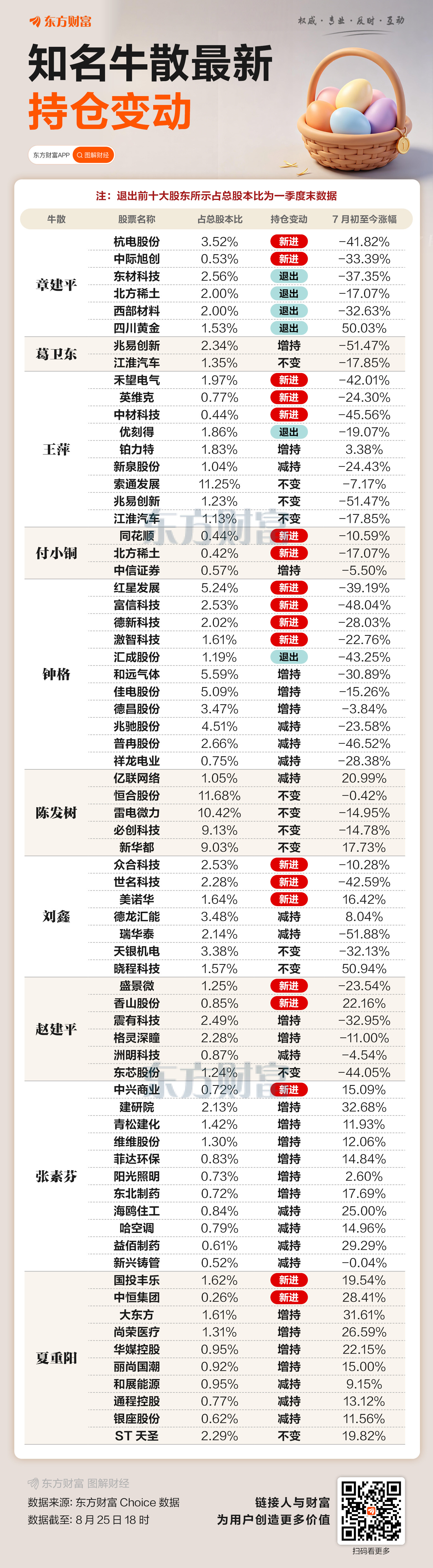
整体来看,章建平在二季度末新进成为杭电股份第三大股东、中际旭创第九大股东,同时退出北方稀土、四川黄金、东材科技和西部材料等个股的前十大流通股东名单;葛卫东及其关联人则在二季度加仓兆易创新。

B | 章建平新进成为杭电股份第三大股东 8月25日晚,杭电股份发布的半年度业绩报告显示,“超级牛散”章建平新进成为第三大股东,持有2432.45万股,占总股本比例3.52%。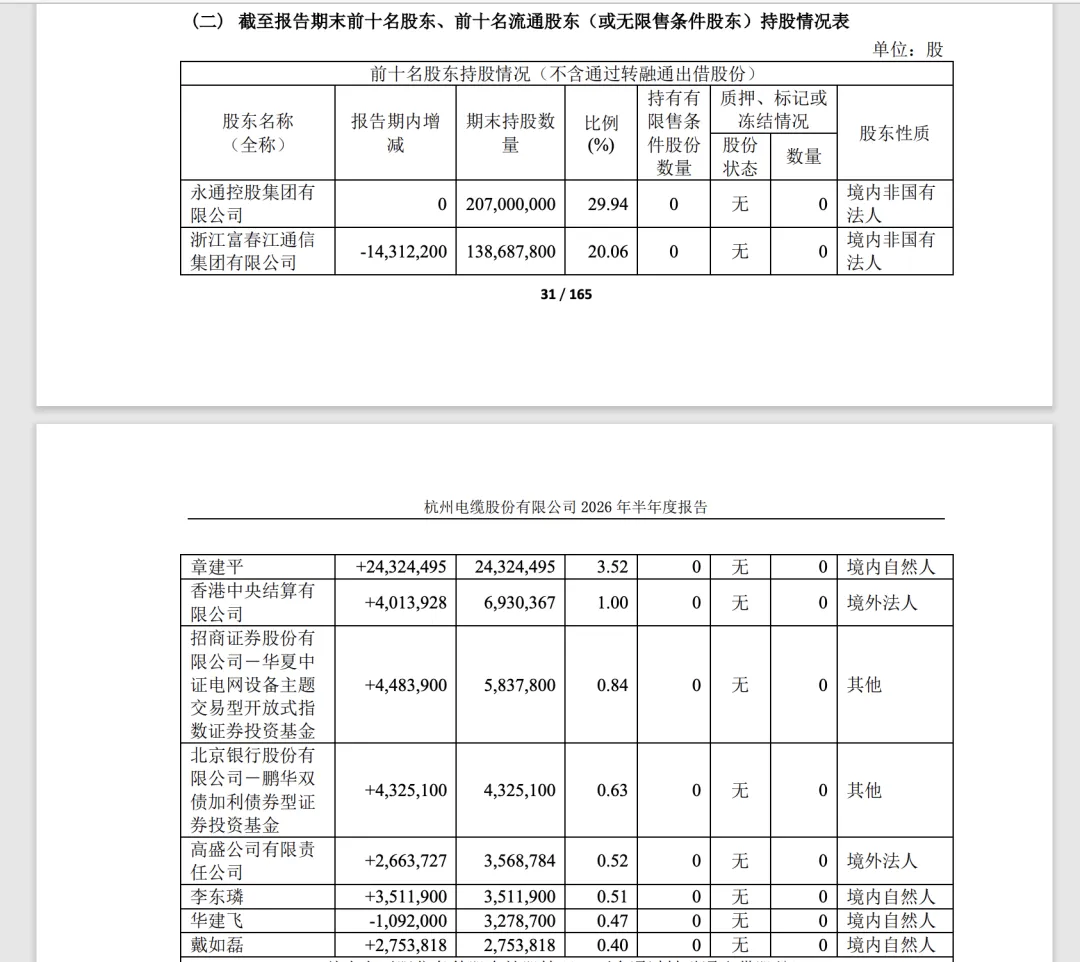 杭电股份半年报显示,公司上半年实现营业收入50.97亿元,同比增长12.66%;归属于上市公司股东的净利润为3.93亿元,同比增长938.67%。公告显示,1—6月,公司生产经营呈现“电力电缆业务保持稳定、光通信业务增收增利、铜箔业务稳步推进”的态势。

C | 从公司股价走势来看,6月25日,杭电股份股价创历史新高,最高触及57.21元/股。自年初至6月25日,公司股价累计涨幅达609.55%。之后,杭电股份股价回调,今年以来,截至目前,公司股价累计涨超260%。

D | 除了杭电股份之外,章建平二季度最大的动作当属对中际旭创的重仓。中际旭创半年报显示,截至二季度末,章建平新进成为中际旭创第九大股东,持有593.48万股,占总股本0.53%,以上半年末股价计算,持仓市值超过75亿元。 与此同时,章建平在二季度对资源股进行了集中减持。数据显示,他退出了北方稀土、四川黄金、东材科技和西部材料四只个股的前十大流通股东名单。其中,一季度末时章建平持有北方稀土7225万股,而二季度末该股第十大流通股东持股仅1107.5万股,意味着其减持了八成以上的仓位。对于西部材料,章建平一季度以984.94万股的持股量新晋第四大股东,占总股本2.02%,二季度便完成“快进快出”。 葛卫东增持兆易创新 知名牛散葛卫东及其关联人的持仓也在近期浮出水面。数据显示,截至二季度末,葛卫东共现身2家上市公司前十大股东名单,分别为兆易创新和江淮汽车,合计持仓市值超140亿元(以上半年末股价计算)。二季度,葛卫东小幅加仓兆易创新,对江淮汽车持股不变。 兆易创新披露的2026年半年报显示,截至二季度末,葛卫东持有该股1644.67万股,占总股本2.34%,位列第四大股东;其一致行动人王萍持有860.59万股,为公司第六大股东。与一季度末相比,二人分别增持18.51万股和103.27万股。值得注意的是,葛卫东在2025年三季度和2026年一季度曾减持兆易创新,在今年二季度转为重新加仓。 王萍二季度操作更为活跃,截至上半年末,共现身兆易创新、索通发展、中材科技、江淮汽车、禾望电气、新泉股份6家公司的前十大流通股东名单,合计持仓市值超100亿元。其中,她新进了中材科技和禾望电气,同时增持兆易创新103.27万股,但对新泉股份进行了大幅减持,持仓降至约744.18万股。 葛卫东另一位关联人葛贵莲二季度新进了新泉股份前十大流通股东名单,截至上半年末持股381.17万股。 此外,知名投资人陈发树的持仓相对稳定,数据显示,陈发树二季度末现身新华都、恒合股份、雷电微力、必创科技、亿联网络等公司前十大流通股东名单。其中,除了小幅减持亿联网络,其余几家公司的持仓不变。 另一知名“牛散”付小铜则在二季度新进了北方稀土和同花顺,同时小幅加仓中信证券。
 (文章来源:券商中国)。
Current article:http://vn2.panningbuquanchencaibingzhang.cyou/list_uxh/lqvddnj.html
Published on:08:56:44


 倒计时10天!越来越多实践成果涌向杭州 这群年轻人说:“行走”不止于这个夏天
 黄金面临重要阻力,杰克逊霍尔会议或将成为关键指引
 韩国男子长期家暴中国妻子,还持刀威胁,被判坐牢3年半
 网友质疑饲养员斥责大熊猫“萌兰”,北京动物园回应:饲养员手势是在沟通打扫区域,并非指向“萌兰”,望网友理性看待工作人员的日常工作
 国家防总办公室、应急管理部向河南紧急调拨中央防汛物资 支持做好抗洪抢险工作
 西媒:巴尔韦德带伤踢了几场比赛,他不想关键时刻让球队失望